

 What We DoIssuesGlobal HealthGlobal Health Resource CenterProtecting the Future: Keeping Mothers and Children Healthy During Humanitarian Crises
Written by: Patricia Chacón and Patricia Sanchez Bao, Directors of Global Health, United Nations Foundation

One in four people around the world live in fragile settings. Increasing conflict, natural disasters, political instability, and other complex factors are contributing to an unprecedented number of children and families living amid humanitarian crises.
Mothers and children are particularly at risk in times of crisis. According to the World Health Organization, 53% of deaths in children under five, 45% of infant deaths, and 60% of preventable maternal deaths occur in fragile settings. Health systems operating in these conditions face immense strain, putting communities (and surrounding regions) at risk for infectious disease outbreaks. Decades of hard-won progress on maternal and child health goals are under threat.
And yet, despite many challenges, stakeholders across sectors are innovating to deliver healthcare to the most vulnerable.
On the sidelines of the 79th World Health Assembly, alongside the International Federation of the Red Cross and Red Crescent Societies (IFRC) and the United Nations Children’s Fund (UNICEF), the United Nations Foundation co-hosted a discussion titled, Sustaining Life-Saving Services for Mothers and Children in Fragile Settings.
The event brought together health and humanitarian leaders from Ministries of Health, donors, the diplomatic community, civil society, global health initiatives, and the private sector. Speakers shared their perspectives on challenges, opportunities, and a vision for the future, including efforts to strengthen responses to health emergencies while building longer-term health system resilience.

Drawing on their experiences providing services and meeting community needs, government representatives emphasized the following approaches:
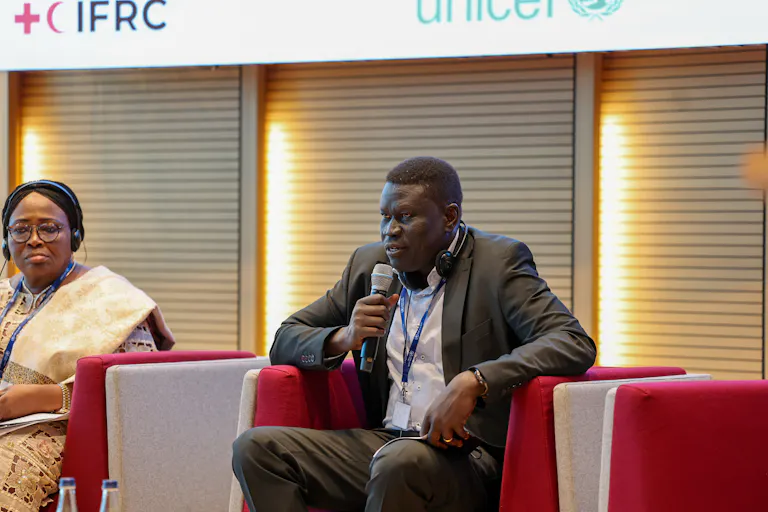
Civil society champions highlighted the importance of leveraging community resources and solutions, empowering the next generation of leaders, and supporting community-led movements to surface priorities and mobilize support.
Cecilia Senoo, Executive Director of Hope for Future and a Ghanaian nurse who has delivered health services on the frontlines for decades, said that civil society is indispensable: “This is the time to work with civil society. There are institutions that always show us the example, Global Fund is one of them … Civil societies are on the ground … we are community-owned resources, human resources that government and people must use … A little investment in civil society programs or interventions and human resources will achieve a lot, and we can make the impact.”

Speakers highlighted the linkages with polio and malaria services as these programs operate in many of the world’s most fragile settings. Supporting malaria and polio programming not only helps ensure that children continue to receive protection against these devastating diseases but also enables countries to leverage well-established program infrastructure to deliver health services to the hardest to reach communities. This infrastructure includes networks of front-line health workers, logistics systems that transport vaccines and medications, laboratories to detect disease, outbreak response expertise, and the ability to reach mothers and children living in remote and insecure areas.
Ramesh Ferris, a Canadian polio survivor, Global End Polio Advocate, and Rotarian, spoke about the wider impact of polio programming: “Programs like the Global Polio Eradication Initiative are truly a blueprint to combat other health issues. The infrastructure that’s been developed from the Global Polio Eradication Initiative has helped us to address other diseases, yellow fever, Zika, COVID-19, Ebola.”
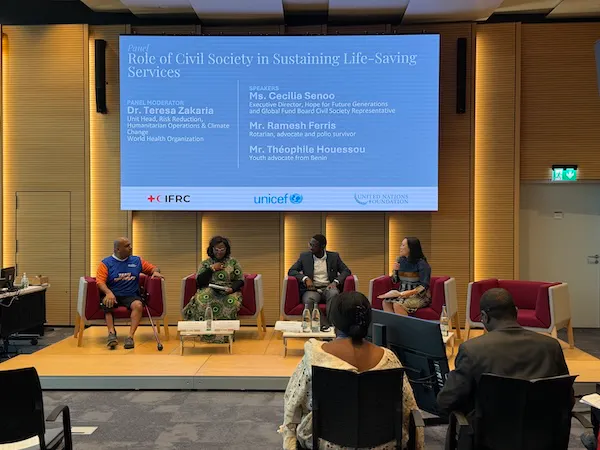
The discussion also highlighted the importance of investing in young leaders. More than half of the population of the Middle East, and 70% of sub-Saharan Africa, are under 30 years of age. Meaningful engagement by youth to address public health challenges is critical to sustaining progress today and for the long term.
Théophile Houessou, a youth advocate and data scientist from Benin said, “I will say there is no future without the youth, and we totally need to invest into the youth and into their aspirations. We are coming up with ideas, we are coming up with new ways to also tackle diseases and struggles we have in our communities, and supporting these initiatives will be a very good way to truly make sure that the future is bright.”
The discussion made one thing clear: We all have a role to play. As millions of lives hang in the balance, and humanitarian needs increase, we must continue to come together and leverage every available resource to ensure that all children, mothers, and families have access to life-saving health services regardless of where they live or the challenges they face.
Last Updated: June 25, 2026
Patricia Chacón and Patricia Sanchez Bao are Directors of Global Health at the United Nations Foundation
To get the latest Global Health news from our experts, subscribe to our monthly newsletter.